
SNAP Food Replacement After a Power Outage: Which States Let You Claim Spoiled Groceries
What “food loss” replacement means under federal SNAP rules and why states administer it differently
When the power goes out for an extended stretch, or floodwater gets into your kitchen, the food you bought with SNAP benefits can spoil fast. Federal rules allow states to replace SNAP-purchased food that’s destroyed in a “household misfortune” — a power outage, fire, flood, or similar event. That’s the baseline. But Congress left the details of how to apply for it up to each state agency, and that’s where things get confusing if you’ve moved recently or are comparing notes with someone in another state.
The federal rule is a floor, not a script. It says states must offer a way to replace food lost this way, but it doesn’t dictate the paperwork, the proof, or even how fast the state has to process the request. So one state might let you report a loss with a phone call, while a neighboring state wants a signed form delivered in person. Both are following the same federal rule. They’ve just built different front doors to it.
Which states require a signed affidavit vs. photo evidence of spoiled food
Most states ask for some form of written statement — often called an affidavit or a food loss report — where you describe what was lost, roughly how much it was worth, and when the spoilage happened. In many states, your signature on that form is enough. The caseworker takes your word for it, within reason, especially if the outage or disaster was widely reported in your area.
Other states ask for more. Some want photos of the spoiled food before you throw it out, a copy of a utility outage notice, or a statement from a landlord or utility company confirming the power was out at your address. A few states will accept a verbal report initially but follow up asking for documentation before they approve the replacement.
If you’re used to how this worked in one state and move to another, don’t assume the same approach will work. Someone who tells you “I just called and they replaced it, no questions asked” may be describing a state with a lighter-touch affidavit process — not the process where you now live. When in doubt, take photos of spoiled food before you throw it away and save any outage notification you get from your utility. That documentation doesn’t hurt you in a low-proof state, and it can save you in a high-proof one.
Typical deadlines for reporting a loss after a power outage or flood
Federal guidance generally expects households to report food loss within 10 days of the event. That 10-day window shows up in most states’ rules in some form, but how strictly it’s enforced — and whether there’s any flexibility — varies.
Some states treat the 10-day mark as a hard cutoff. Report on day 11, and the claim is denied, no exceptions. Others build in some room, especially if the disaster itself disrupted phone lines, mail, or your ability to get to an office — they may extend the deadline for the length of time normal operations were disrupted. A few states also have a separate, shorter window for reporting the loss of an EBT card itself, which is a different issue from spoiled food but sometimes gets confused with it.
The safest approach, no matter where you live, is to report the loss as soon as you reasonably can — ideally within a day or two once you know the food is gone — rather than waiting to see if the power comes back on. Waiting to find out “if it’s worth reporting” is one of the most common ways people miss the deadline entirely.
How replacement amounts are calculated: partial month allotment vs. documented loss value
States generally use one of two approaches to figure out how much to replace.
The first is a partial allotment method: the state looks at your monthly SNAP benefit, calculates roughly what portion of a month’s groceries were affected, and issues a prorated replacement based on that math rather than an itemized list of what spoiled.
The second is a documented loss method: you list what was lost — a pound of ground beef, a gallon of milk, a bag of frozen vegetables — and the state replaces up to that documented value, capped at your monthly allotment amount. This approach usually requires more detail from you but can result in a more accurate replacement if your freezer was fully stocked.
Neither approach will replace more than one month’s worth of your regular SNAP allotment for a single loss event, and most states cap replacement at that monthly amount regardless of how much food you actually lost. If your freezer was unusually full — say, you’d just done a large stock-up shop — it’s worth itemizing carefully rather than accepting a flat partial estimate, since the itemized number may come closer to your actual loss within that cap.
States with automatic mass replacement after a federally declared disaster vs. case-by-case requests
When a hurricane, ice storm, or widespread flood leads to a federal disaster declaration covering a broad area, some states streamline the process. Instead of requiring every household to file an individual food loss report, the state may issue an automatic mass replacement — typically a percentage of the monthly allotment — to everyone receiving SNAP in the affected counties. You don’t have to ask; it just shows up.
This is more common in states that have dealt with large-scale outages before and have built the administrative muscle to do a mass issuance quickly. Other states, even after a declared disaster, still require each household to file its own individual report, affidavit, or documentation — the disaster declaration doesn’t change the paperwork, it just confirms that something significant happened in your area.
If you’ve heard that “everyone automatically got extra food money” after a storm in another state, that’s describing a mass replacement policy specific to that state’s response — not a universal rule. If your area experiences a widespread outage and you haven’t heard anything from your state agency within a reasonable time, don’t assume you’re covered automatically. File the individual report anyway, just in case.
How this differs from Disaster SNAP (D-SNAP) and when each applies
Food loss replacement and D-SNAP often get mixed up because they both follow disasters, but they’re separate programs with separate purposes.
Food loss replacement is for people who were already receiving SNAP before the disaster and lost food they’d already bought. It replaces benefits you already had, up to the value lost.
D-SNAP is temporary emergency food assistance for people in a federally declared disaster area who were not already on SNAP — including households that might not normally qualify under regular income rules, but whose disaster-related expenses (home repairs, temporary lodging, lost income) push them into eligibility for a short period. D-SNAP is only activated when the state requests it and the federal government approves it for specific counties, and it typically runs for a limited application window after the disaster.
In short: if you were already getting SNAP and your food spoiled, you want the food loss replacement process described above. If you weren’t on SNAP but the disaster has left you needing food help, D-SNAP is the program to watch for — and it’s only available where and when it’s officially activated.
Steps to take right after an outage to protect your claim no matter which state you’re in
Because the rules vary so much, the best protection is to document first and ask questions second. Right after a power outage or flood:
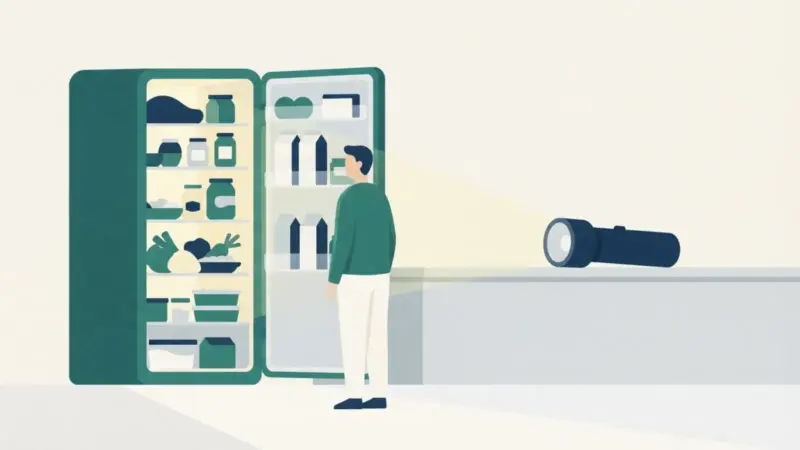
Take photos of the food before you throw it away, including freezer and refrigerator contents if possible. Save any outage notice, text alert, or email from your utility company showing when power went out and came back. Make a simple written list of what was lost and roughly what it cost, even a rough estimate is better than nothing. Report the loss to your state SNAP agency as soon as you can, ideally well within 10 days — don’t wait to see if the power problem resolves on its own. Ask your caseworker directly whether your state requires a signed affidavit, photos, or other documentation, since that answer differs by state and isn’t always obvious from the general paperwork. Keep a copy of whatever form you submit and note the date you submitted it, in case you need to follow up.
None of this guarantees a specific outcome, since approval depends on your state’s rules and the details of your situation. But doing these things puts you in the strongest possible position, regardless of which state’s process you’re navigating.
Assistance Line USA updates
Practical updates for people who have relocated or are planning to relocate between states.