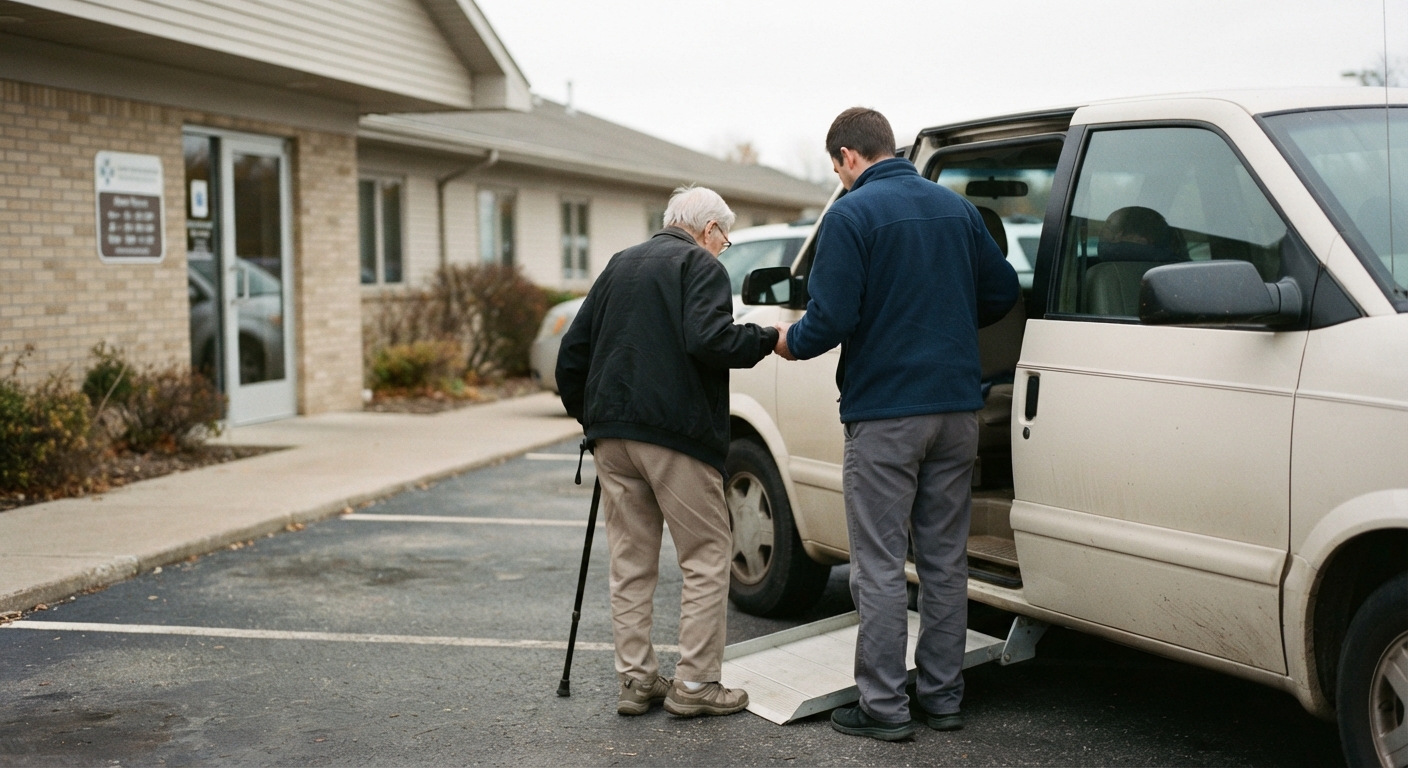
If you’ve ever had a Medicaid caseworker mention “NEMT” and then move on like you should know what that means, you’re not alone. Non-emergency medical transportation is the part of Medicaid that helps people get to and from appointments when they don’t have another way to get there. It covers things like dialysis visits, physical therapy, prenatal checkups, and mental health counseling — anything that’s a covered service but isn’t an emergency requiring an ambulance.
Every state Medicaid program has to offer some form of NEMT. This isn’t optional or a bonus benefit some states choose to add. It’s built into how Medicaid works at the federal level, based on the idea that a covered appointment doesn’t do much good if a person has no way to physically get there. But “must offer it” and “offers it the same way” are two very different things, and that gap is where a lot of confusion happens, especially for people who’ve just moved and are going by what worked in their old state.
How states structure NEMT differently
The biggest difference you’ll run into isn’t whether a state has NEMT, but who actually runs it. Some states hire a single statewide broker — a private company that manages ride requests, dispatches drivers, and handles complaints for the whole state. You call one number no matter where you live, and that company arranges everything from a taxi to a wheelchair van depending on your needs.
Other states split this responsibility by county or region. In these places, the agency or contractor handling your rides in one county might have nothing to do with the one running things two counties over. This matters a lot if you’re moving across county lines within the same state, not just across state lines. A phone number and process that worked perfectly at your old address may not apply at all once you’ve relocated, even if you’re still on the same Medicaid plan.
There are also states that lean more heavily on managed care organizations to handle transportation as part of a bundled health plan, meaning your specific insurance plan under Medicaid — not just the state — determines who you call and what the rules are. If you’re comparing notes with a friend or relative in another state who says “Medicaid just sends a van,” that might be accurate for their specific plan and county, but it doesn’t tell you much about what your setup will look like.
Why this matters when you relocate
Because there’s no single national NEMT system, moving between states means starting over with a new set of contacts, rules, and sometimes a new mode of transportation entirely. Someone who relied on a scheduled van service in one state might find their new state offers only mileage reimbursement, or vice versa. Neither approach is better across the board — they’re just different tools for solving the same problem, and the right one depends on what kind of appointments you have and how far you live from them.
Mileage reimbursement vs. scheduled ride programs
Broadly, NEMT shows up in two main forms, though many states use a mix of both depending on the situation.
Mileage reimbursement works when you or someone you know drives you to the appointment, and the state pays back a set amount per mile afterward. This tends to be common in rural areas where scheduling a van or bus route for every appointment isn’t practical. The amount paid per mile varies by state, and some states also cap how many miles or how much total reimbursement you can claim in a given period. There’s often a waiting period between the appointment and when the reimbursement actually arrives, so this option works best for people who can cover the gas cost upfront and wait to be paid back.
Scheduled ride programs are what most people picture when they think of Medicaid transportation — a van, shuttle, or contracted rideshare service picks you up and takes you to your appointment, then brings you home. These programs are more common in urban and suburban areas with enough population density to make regular routes worthwhile. Some states also fold public transit passes into this option, providing bus or subway fare instead of a dedicated pickup.
What varies enormously between states is which of these options is the default, and which one you have to specifically request or qualify for. In some states, mileage reimbursement is treated as the backup plan for people who fall outside the scheduled service area. In others, mileage reimbursement is the primary offering, and scheduled rides are reserved for people with documented mobility limitations that make self-transportation, even with someone else driving, unrealistic.
Wait times and advance scheduling rules
This is often the part that catches people off guard after a move. States set their own rules for how far ahead you need to schedule a ride, and those rules can be strict.
Some states require advance notice of several business days for anything that isn’t urgent, meaning a same-week appointment request might get denied simply because it came in too late, not because you’re ineligible. Other states offer more flexibility, allowing next-day or even same-day scheduling for certain appointment types, particularly recurring treatments like dialysis where the schedule is predictable and the transportation provider already has a routine built around it.
Recurring appointments are generally treated differently from one-off visits almost everywhere, but the details of how differ by state. Some states let you set up a standing ride order once, so you don’t have to call in every single week for the same dialysis or therapy appointment. Others require you to confirm each ride individually, even if it’s the exact same appointment at the exact same time every week.
Cancellation and no-show policies also vary. Some states are fairly lenient about last-minute changes, especially for people with unpredictable health conditions. Others track no-shows and may require you to explain a pattern of missed rides before continuing to approve future ones. None of this is about punishing anyone — it’s usually about the state managing a limited pool of vehicles and drivers efficiently — but it does mean the margin for error can be tighter in some states than others.
What to check first if you’re relying on Medicaid rides after a move
If you’re moving states and Medicaid transportation is part of your routine, a little groundwork before the move — or right after — can save you from a missed appointment.
Start by confirming that your Medicaid case has actually transferred or been newly approved in the new state. NEMT benefits are tied to active Medicaid eligibility, so if there’s a gap in your coverage during the transition, transportation coverage will have that same gap. Don’t assume the ride benefit carries over just because you were approved for it somewhere else.
Next, find out whether your new state uses a statewide broker or a county/regional system. This determines whether there’s one phone number to learn or several, and it affects how specific your search needs to be when looking up contact information. If you’re working with a managed care plan, check whether transportation is handled through the plan itself or through a separate state-run system — the answer isn’t the same everywhere.
Ask directly whether your new area offers scheduled rides, mileage reimbursement, or both, and don’t assume the option you’re used to is available. If you have recurring appointments, ask specifically about standing ride orders versus per-appointment scheduling, since setting this up correctly the first time avoids a lot of repeat phone calls later.
Finally, ask about advance notice requirements before you need a ride urgently. Find out the minimum number of days needed for a standard request and what, if anything, counts as an exception for last-minute situations. Knowing this ahead of time means you can plan your first appointments in the new state around the scheduling window instead of finding out the hard way that a request came in too late.
NEMT is one of those benefits that works quietly in the background until it doesn’t, and the rules genuinely do shift from one state line to the next. Treating it as its own separate thing to research after a move, rather than assuming it comes along automatically with your Medicaid coverage, is the simplest way to avoid a gap.