Weatherization Assistance Program: How Free Home Energy Upgrades and Waitlists Differ by State
If you’ve heard that your state will insulate your attic or fix your furnace for free, you heard right — sort of. The Weatherization Assistance Program (WAP) is a real federal program, funded through the Department of Energy and passed down to states, which pass it down again to local agencies that actually do the work. But almost everything about the experience — who qualifies, how much gets fixed, and how long you wait — is decided at the state and local level. Two people with nearly identical incomes and nearly identical houses, one in Ohio and one in Arizona, can have completely different experiences with this program. Here’s what actually varies, and what stays the same no matter where you live.
What the Weatherization Assistance Program actually covers, from insulation to furnace and window repairs
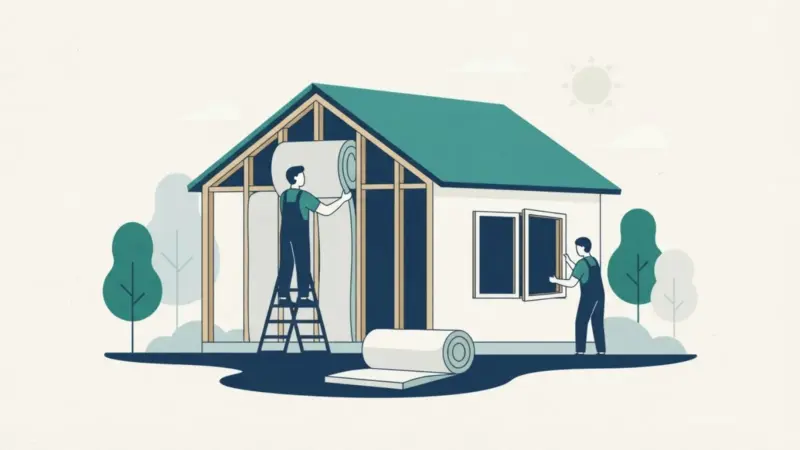
At its core, WAP sends a trained crew to your home to do an energy audit, then make repairs that cut your heating and cooling costs. The most common work includes attic and wall insulation, air sealing around doors and windows, duct sealing, and furnace or heat pump repair or replacement when the existing unit is unsafe or failing. Some programs also cover water heater repairs, minor electrical work needed to safely install equipment, and health-and-safety fixes like carbon monoxide detectors or venting repairs that have to happen before insulation can go in.
What it generally does not cover is cosmetic work, general home repair unrelated to energy use, or major structural problems like a failing roof — unless that problem is directly blocking an energy fix, in which case some states will do limited repair work to clear the way. This is one of the biggest points of confusion between states: a leaking roof might get patched in one state because insulation can’t go in over wet wood, and in another state that same household gets denied and told to fix the roof themselves first. The program’s rulebook allows for this kind of judgment call, and local agencies use it differently.
How income eligibility ties to LIHEAP limits and why the cutoff amount varies by state
WAP eligibility is generally tied to the same income limits used for LIHEAP, the Low Income Home Energy Assistance Program that helps pay heating and cooling bills. That sounds simple, but LIHEAP income limits themselves vary by state, because states are allowed to set their cutoff anywhere within a range tied to the federal poverty level and the area median income, whichever is higher. Some states set their limit closer to the federal poverty line. Others set it higher, closer to area median income, which lets more middle-lower-income households qualify.
This is exactly why a relative in another state can tell you “we qualified and our income was X” and that number means nothing for your own application. If you’re comparing notes with someone across state lines, compare program rules, not dollar figures. Some states also automatically qualify a household for weatherization if they already receive certain other benefits, like SNAP or SSI, which can skip the income documentation step entirely — but again, which benefits trigger that automatic qualification differs by state.
Per-home spending caps: why some states can fix a roof leak and others can only add insulation
Every state sets a maximum amount that can be spent per household under the program. This cap exists because federal and state funding has to stretch across as many homes as possible, and without a ceiling, a handful of homes with severe problems could absorb an entire year’s budget. But the caps themselves differ significantly from one state’s program to the next.
A state with a higher per-home cap can do more comprehensive work in a single visit — replacing a furnace and doing insulation and air sealing all in one project. A state with a lower cap might only be able to afford insulation and basic air sealing, leaving furnace repair for a separate funding cycle or a referral to another program entirely. This is the practical reason some households get a full retrofit and others get a partial fix that still leaves them cold in January. It’s not usually about how bad your house is — it’s about what your state’s cap allows.
How states prioritize applicants: elderly, disabled, high energy burden, and what that means for your place in line
Because demand almost always outpaces funding, states are required to set priority criteria for who gets served first. Nearly every state gives some priority to households with elderly members, people with disabilities, and households with young children, but the weighting differs. Some states use a strict point system where a household with an elderly or disabled resident automatically jumps ahead of others on the list. Others weigh “energy burden” heavily — meaning how much of the household’s income goes toward energy bills — so a lower-income household in a drafty, poorly built home might rank higher than a similarly poor household in a newer, more efficient one.
A few states also give priority based on how old or inefficient the heating system is, since a failing furnace is treated as more urgent than a home that’s simply under-insulated. If you’re trying to gauge your own place in line, ask the local agency directly what their priority factors are — it’s usually a short, specific list, and knowing it can help you understand realistically where you stand rather than guessing based on someone else’s experience in a different state.
Typical wait times from application to completed work, and why funding rounds create seasonal backlogs
Wait times for WAP are one of the most misunderstood parts of the program. It is common, in many states, for the wait between application and actual completed work to run into many months, and in areas with high demand or limited local staffing, well over a year. This isn’t a sign that something went wrong with your application — it’s usually a function of how funding is released and how many crews a local agency has.
Funding for WAP often arrives in annual or multi-year allocations, and agencies build waitlists that they work through as money and crew time become available. Some states see a seasonal crunch: applications spike after a hard winter or a spike in heating bills, then taper off, creating a bulge in the waitlist that takes months to work through. If your state’s program is nearing the end of its funding year when you apply, you may be placed in the next funding cycle rather than the current one, which can add several months before anyone even schedules your energy audit. Asking the local agency where you fall in the current funding cycle, rather than just “how long is the wait,” tends to get you a more useful answer.
How to find your state’s weatherization network agency and what documents speed up approval
Because WAP is delivered through a network of state-designated local agencies — often community action agencies or regional nonprofits — there’s no single national office to apply through. The state energy office or the state’s Department of Community Affairs (naming varies by state) typically maintains a directory of which local agency covers your county or region. Starting there, rather than searching broadly, will get you to the right intake office faster.
Regardless of state, a few documents almost always speed things up: proof of income for all household members for the past month or two, a recent utility bill in the applicant’s name or showing the applicant’s address, proof of residency, and Social Security numbers or equivalent ID for household members. If you already receive SNAP, LIHEAP, SSI, or a similar benefit, bringing that award letter can sometimes shortcut the income verification step, depending on your state’s rules.
Differences between renter and homeowner eligibility rules by state
Renters are eligible for WAP in every state, but the process is more layered because the landlord typically has to give written permission for the work and, in many states, agree not to raise rent because of the improvements for a set period. Some states require the landlord to contribute a share of the cost, especially for expensive fixes like furnace replacement, on the theory that the landlord benefits from a more valuable, more efficient property. Other states waive that cost-share requirement for low-income landlords or small rental properties.
If you’re renting and your landlord is unresponsive or unwilling to sign off, that can stall or end an application in some states, while others have a process for the local agency to intervene or document the refusal. If you’ve moved from a state where landlord cooperation wasn’ t a major hurdle to one where it is, this is worth asking about early, before you invest time gathering income documents — a landlord who won’t sign the agreement can be a bigger obstacle than income eligibility itself.
Assistance Line USA updates
Practical updates for people who have relocated or are planning to relocate between states.