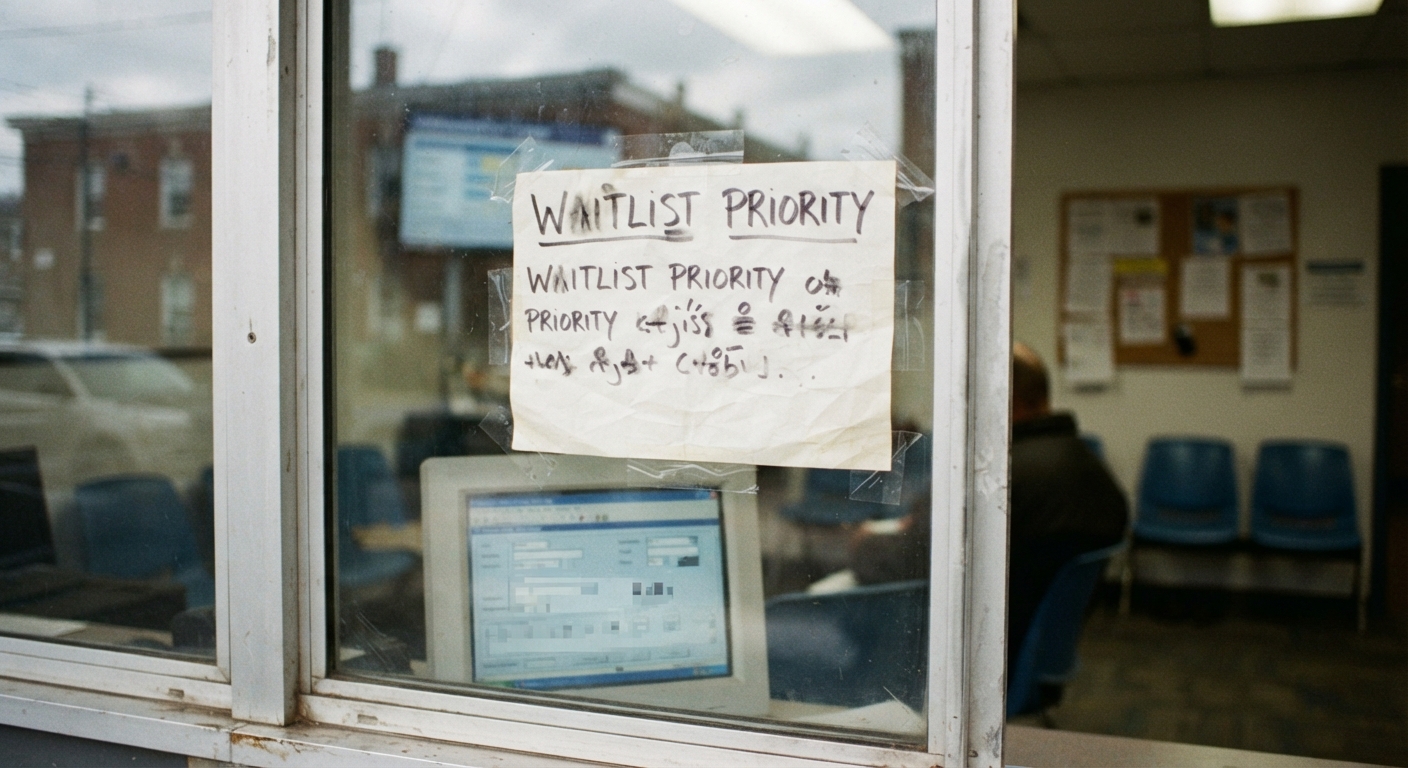
What a “local preference” is and why HUD allows it
If you’ve ever looked at a public housing waitlist and wondered why someone who applied after you got housed first, the answer is often something called a local preference. A local preference is a rule a public housing authority (PHA) sets that moves certain applicants higher on the waiting list, ahead of people who might have applied earlier but don’t meet the preference criteria.
The U.S. Department of Housing and Urban Development (HUD) doesn’t run local preferences itself. Instead, it gives PHAs the authority to write their own preference policies into their local Administrative Plan or PHA Plan, as long as the policies don’t discriminate based on protected characteristics like race, national origin, or disability. HUD’s reasoning is that housing authorities know their own communities better than a federal office does. A PHA in a small rural county and a PHA in a dense city have very different housing markets, different waitlist sizes, and different local pressures, so HUD lets each agency decide who should be prioritized.
The practical effect is that “first come, first served” is more of a myth than a rule in most places. Waitlists are usually organized by preference category first, and only within each category does application date matter. That means a person who just moved to a state and applied last month could be housed before someone who’s been on the list for two years, if the newer applicant qualifies for a preference the longer-waiting applicant doesn’t.
Examples of common preference categories: residency, employment, veteran status, displacement
Local preferences vary a lot from one housing authority to the next, but a handful of categories show up again and again:
Residency. Many PHAs give priority to people who already live within the city or county the authority serves at the time they apply. Some go further and give extra weight to people who have lived there for a minimum stretch of time, such as one year.
Employment. Some agencies prioritize applicants who work within the jurisdiction, even if they don’t live there. This is common in areas where housing costs have pushed workers, including teachers, healthcare aides, and city employees, out of the community they serve.
Veteran status. A number of PHAs give preference points to veterans or to households that include a veteran, sometimes on top of other preferences a household already qualifies for.
Displacement. If someone is being forced out of their current home through government action, such as a demolition, condemnation, or a natural disaster declaration, many housing authorities will move them up the list. This category is meant to catch people who lost stable housing through no fault of their own.
Other categories. Some agencies also prioritize people fleeing domestic violence, people experiencing homelessness, people with disabilities in need of accessible units, or households referred by a specific local agency. A single PHA might use two or three of these at once, and an applicant can sometimes qualify for more than one preference, which stacks their position even higher.
Because each housing authority writes its own plan, the exact combination and the weight given to each category is different everywhere. There is no national standard list.
States and cities that use strict local preference vs. those that don’t
There’s a real range here, from PHAs that require residency before you can even apply, to PHAs that don’t use residency as a factor at all.
Larger cities with long-standing housing shortages, particularly in parts of the Northeast and West Coast, tend to have well-defined, strict local preference systems. In those places, it’s common to see residency, work, or displacement preferences that meaningfully separate local applicants from out-of-area applicants, sometimes creating what amounts to two different waitlists in effect: one that moves and one that barely does.
Some mid-sized cities and county-wide housing authorities use a lighter touch, giving residency a modest point boost rather than making it a hard gate. In these systems, an out-of-state applicant might wait longer, but not indefinitely.
On the other end, some rural housing authorities and a number of state-run PHAs use no local preference at all, either because their applicant pool is small enough that it isn’t necessary, or because their policies were written to keep the list open to anyone in a broader service area. In those places, application date really does drive most of the waitlist order.
Because this varies PHA by PHA rather than state by state, the only reliable way to know what a specific location does is to read that individual housing authority’s current Administrative Plan or ask their waitlist staff directly. A preference policy in one city tells you nothing about the county next door, even within the same state.
How local preference interacts with Section 8 portability
Section 8 (Housing Choice Voucher) portability lets someone who already has a voucher move it from one PHA’s jurisdiction to another. This is a separate process from applying fresh to a new PHA’s waitlist, and it’s a common point of confusion.
If you already hold a voucher and port it to a new area, you generally keep your voucher and don’t have to re-enter that PHA’s applicant waitlist from scratch, since you’re not applying for a new voucher, you’re transferring an existing one. Local preference rules mainly affect people applying for a voucher or public housing unit for the first time at a given PHA, not people porting an active voucher in.
Where things get complicated is when someone doesn’t yet have a voucher and is hoping that moving to a new state will put them ahead in line. That’s a different situation entirely. Without an existing voucher, a new arrival is simply a new applicant, and they’ll be judged against that PHA’s own preference categories like anyone else. If that PHA has a strict residency preference, arriving without a voucher first can actually put a new arrival behind local applicants, not ahead of them.
There are also receiving PHAs that have their own rules about absorbing a ported voucher versus continuing to bill the original PHA, which can affect how quickly a move goes through, though this is more of an administrative process step than a preference issue.
What to check before assuming a move will help your waitlist position
If a friend or relative in another state told you that you’d “definitely qualify” for housing assistance if you moved there, it’s worth slowing down before packing boxes. A few things are worth checking first:
Find the specific PHA’s current Administrative Plan or ask their waitlist office directly what preferences they use, and how those preferences are weighted against each other. A phone call or a look at their published plan will tell you far more than a general impression from someone who went through the process years ago or under different rules.
Ask whether the waitlist is even open. Many PHAs close their waitlists for extended periods when they’re already overloaded, and reopen them only occasionally. A relative’s positive experience might have happened during an open enrollment window that isn’t currently active.
Ask how residency is defined and measured. Some PHAs require proof of residency at the time of application, such as a lease or utility bill, while others require a longer history, like a full year of residency, before the preference applies. If you haven’t lived there yet, you likely won’t qualify for a residency preference no matter how confident someone is that you will.
Ask whether preferences stack. If a PHA gives points for residency, employment, and veteran status separately, someone who qualifies for two or three of those will move up faster than someone who only qualifies for one. Knowing which preferences you’d realistically qualify for, rather than which ones exist on paper, is what actually matters for your position.
Finally, ask about current wait times for your specific preference category, not just the general list. A PHA can have a “current” list that hasn’t moved in years for the general pool but only months for the veteran or displacement categories. The number that matters is the one attached to the category you’ll actually fall into.